Thursday, September 17, 2009

In Search of the Credible News Source

The editor of the Commuter, Ryan Henson, is working on a story about media credibility and trust, and how news consumers can find what they need, namely, reliable news and information.

In his quest, he sent me a couple questions for comment. Here's how I responded:

1. What are some responsible ways that we, as citizens, can stay informed?
The best way to stay informed is to be open to a diversity of news and information sources, from NPR to newspapers, both print and online; from cable TV to network newscasts; from local TV news to area radio; as well as magazines and the advertising all around us.

Too often we get locked into the same sources of information, which can restrict the points of view we read, see and hear. It's immensely beneficial to be aware of what all sides are saying, especially on controversial issues, such as health care, the bailout and spending on higher education.

2. How do you feel about the current handling of news events by the media? If anything, what should they do differently?
Different media appeal to different people. While I may not agree with opinions expressed on CNN, or NPR or Fox, there are many other information consumers who do. Media is a business, after all, and one of its chief concerns is building and maintaining an audience.

In the end, each media outlet establishes its own level of credibility. It's up to consumers to decide how much they are willing to believe. That's why it's so important for people to be savvy information processers. Don't believe everything you see, hear or read. Get the whole story before making up your mind.
How would you answer Ryan's query?

-rp-

(Photo credit: "Trust" by SeenyaRita courtesy of Flickr.com)

Wednesday, September 16, 2009

Stories Soar Through Personal Connections

As I work with young reporters in the journalism program at Linn-Benton Community College, one of the things I stress is honing the ability to tell a good story. I find among the best news and feature stories are ones that not only focus on a compelling person or topic, but also engage us because the writer has a personal connection to the subject.

From the first words of "How a Professor Taught Me to Consult My Stomach," I was captivated by Barbara Bradley Hagarty's admiration for her college professor, Dr. Stocking:
I remember sitting in Shakespeare class, basking in my good luck. The wait list was nearly 100 people, but here I was, a new student at Williams College in Williamstown, Mass., watching the legendary Fred Stocking in action. In 1979, Dr. Stocking was a year shy of retirement, an icon to four decades of students in this small college in the Berkshires. He was lean and meticulous, with a bow tie and thick white hair, and he lived Shakespeare — doting on Puck, thundering through Hamlet, and lifting our gaze from the crass pursuit of A's to the beauty of weathered truths.

He encouraged me to make writing my career, and then unwittingly shaped that career. ...
What a wonderful picture Hagarty creates. Of course, this being the age of new media, this NPR story online is accompanied by a portrait of the professor and the audio version features him speaking as well as singing.

Yes, I'm a softy for features like this one, and the ending doesn't disappoint. You might want to grab a Kleenex.

Some of my students have achieved similar success weaving their personal connections to their subject into their writing. One student wrote about an experience at a drug rehab center for teens, while another regular writes about family, faith, politics and other topics on his blog.

Their writing succeeds because they didn't settle for sharing "just the facts." Instead we get to spend a few moments in their shoes, experiencing life through somebody else's senses.

As a new term approaches, I'm looking forward to working among another group of students with a lifetime of stories to begin sharing.

-rp-

Tuesday, September 8, 2009

McAdams Shares Multimedia Toolbox for Journalists

It's the next best thing to a great journalism textbook. Wait, I think it may be better in so many ways...

Mindy McAdams has compiled her 15 terrific posts that make up the "Reporter's Guide to Multimedia Proficiency" into an elegant one-stop PDF. She goes from reading and creating blogs to editing audio and delivering multimedia presentations.

Every "chapter" begins with a note of encouragement, such as this one on taking photos:
Every journalist should be able to capture a decent photo in a breaking news situation. You might be the only journalist on the scene. Sure, today it’s likely that 100 people with cell-phone cameras will be on the scene too—but why shouldn’t YOU be the one who captures the Page One image that gets picked up by Reuters or AFP and zapped around the world?
Best of all, Mindy doesn't get bogged down in technical jargon or debates over which software is better than the next -- just the tools to set you sailing. The guide is loaded with links to excellent examples and other resources.

As one of her many "fans" (Jack Zibluk) commented: "It’s all here. it’s succinct and comprehensive. The guide provides a solid foundation for anybody interested in multi-media storytelling. It’s great for beginners, and has useful tips for advanced practitioners."

I too am looking forward to sharing Mindy's excellent guide with my media students this fall.

-rp-

Wednesday, September 2, 2009

Make "Web-first" Your News-gathering Mantra

Having trouble building that "Web-first" mindset into your news-gathering operation? This CoPress slide show may be just what you and your staff need to get rolling ... finally ...

It lays out a week-by-week to-do list and inspires at the same time. Here's an example:
Week 6-9: Really take control of live and breaking coverage. This can be as simple as posting event recaps (e.g. sports games, debates, concerts) online within a few hours after they’re over, because that’s when people will be looking. During those same events, post pictures and tweets that your readers will be interested in, and make sure to keep an eye on feedback from your users too.
It's got a variety of good reminders, items that will make you say "duh" but wonder why you're not doing them, and a simple game plan for getting the job done.

So what are you waiting for?

-rp-

Monday, August 24, 2009

Am I an Annoying Facebooker?

I post useful, interesting information on Facebook and should keep doing what I'm doing, according to a CNN.com quiz on using the social networking site. Yea for me.

Brandon Griggs has some fun identifying "The 12 Most Annoying Types of Facebookers" in his CNN report, which includes a somewhat interesting video discussion of social networking and the aforementioned quiz.

Sadly, I think I have some "Town Crier" tendencies and occasionally become the "Self-Promoter." At least I'm not the "Sympathy-Baiter," and my friend count disqualifies me as a "Friend-Padder."

As Griggs notes:
Sure, Facebook can be a great tool for keeping up with folks who are important to you. Take the status update, the 160-character message that users post in response to the question, "What's on your mind?" An artful, witty or newsy status update is a pleasure -- a real-time, tiny window into a friend's life. But far more posts read like navel-gazing diary entries, or worse, spam.
Now that I have a name for the "Maddening Obscurist" and can effectively avoid the "Chronic Inviter," I vow to be better in not so harshly judging the "Bad Grammarian."

-rp-

p.s. Thanks, Lydia, for alerting me to this CNN item by way of Facebook, and providing fodder for a long-overdue blog update.

(Photo credit: "Facebook" by Scott Beale/Laughing Squid courtesy of Flickr.com)

Monday, August 10, 2009

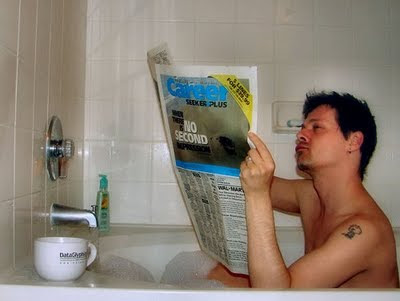
What's Your Brand? Tips for the Job Search


Journalists, especially those looking for their first job or a new one, need to know a thing or two about marketing. Specifically, how to market themselves. What's your brand?

Journalism educator Mindy McAdams offers 10 tips for journalists on building their personal brand. Here's the first four on the list:
  1. People in your field should know who you are.
  2. Someone who Googles your first and last name should be able to find out who you are.
  3. Your online self-representation should demonstrate that you are a serious, ethical journalist.
  4. Samples of your best work should be linked to your home page or online (HTML) resume.
Some of the tips may seem like, well, duh ... but I'm always surprised how many folks overlook the obvious, and it costs them when it comes to moving on or moving up.

-rp-

(Photo credit: "shhhhhh ... i'm huntin jobs" by Aaron Edwards, courtesy of Flickr.com)